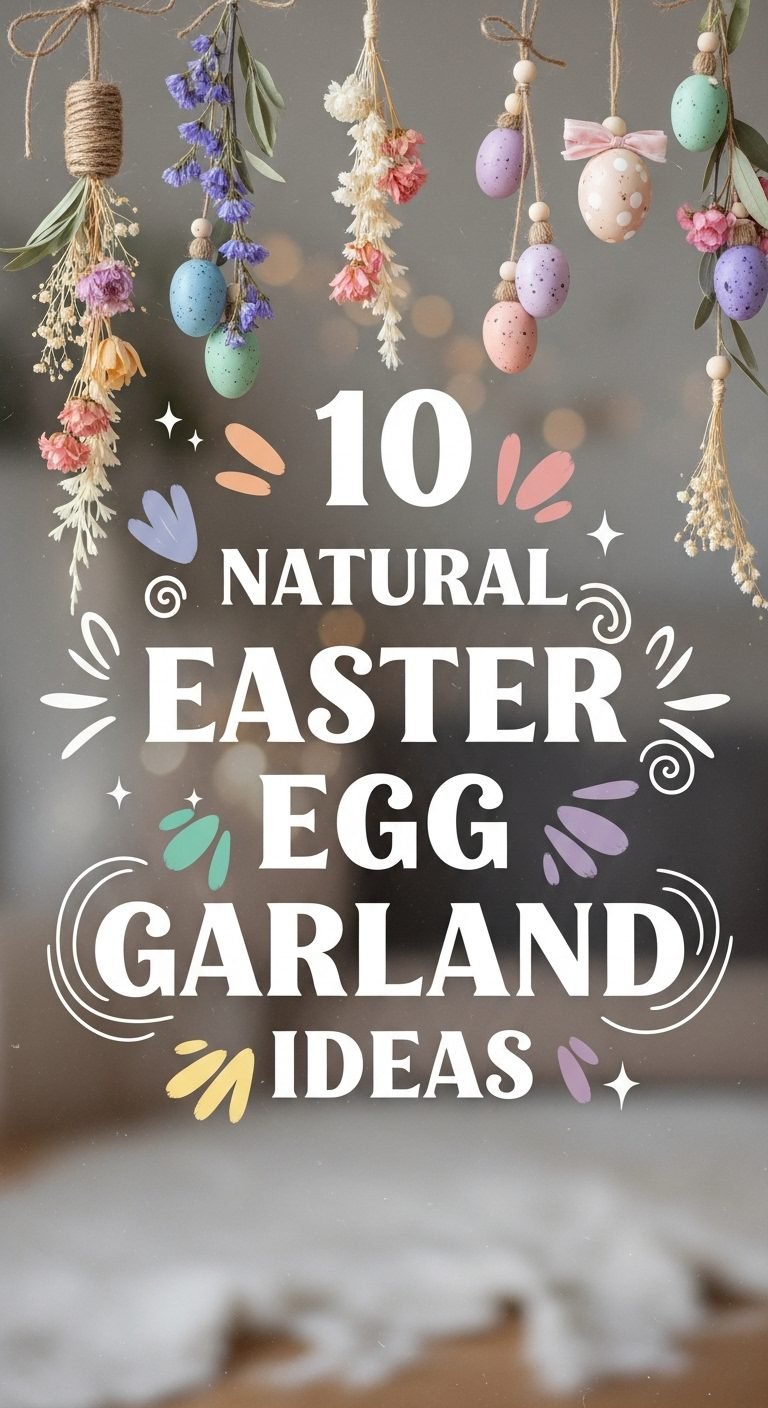
Easter is a time of joy, renewal, and creativity, and one of the most charming ways to celebrate the season is through decorative garlands. While traditional Easter decorations often involve bright colors, synthetic materials, and store-bought embellishments, natural Easter egg garlands bring a warm, rustic, and eco-friendly touch to your holiday décor. Using elements like dried flowers, twine, leaves, and even real eggshells, you can create garlands that feel both timeless and sophisticated. Here are ten natural Easter egg garland ideas to inspire your seasonal creativity.
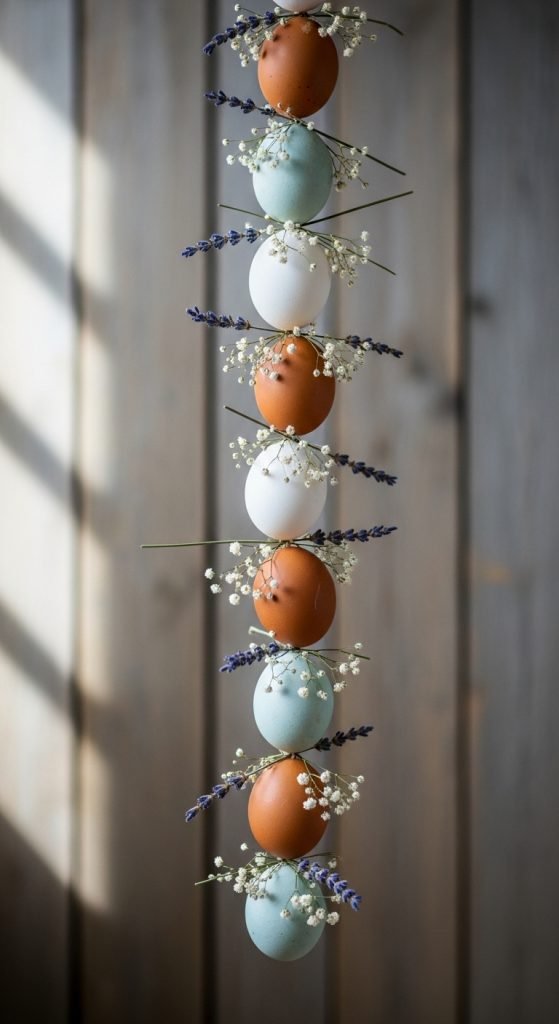
1. Dried Flower and Eggshell Garland
A dried flower and eggshell garland is a delicate way to merge natural textures. Start by carefully emptying real eggshells and rinsing them. Thread a thin jute twine through the shells and attach small clusters of dried flowers like lavender, baby’s breath, or miniature roses between the eggs. The combination of the fragile eggshells and soft, muted tones of the dried flowers makes for a beautifully understated decoration that can hang across a mantelpiece, window, or doorway.
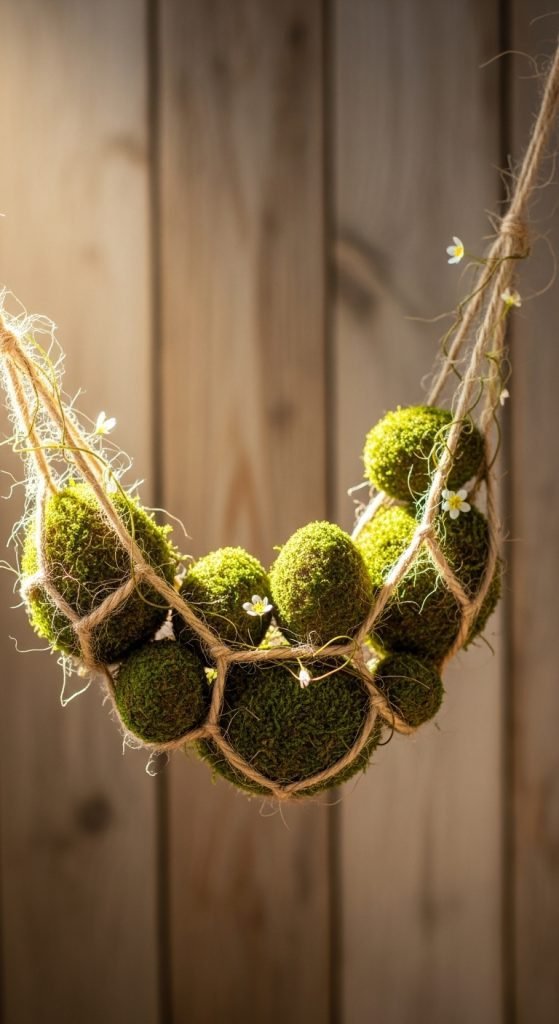
2. Moss-Covered Egg Garland
Bring a woodland vibe to your Easter décor by creating a moss-covered egg garland. Using real or craft eggs, apply a thin layer of glue and gently press moss onto the surface. Attach each moss-covered egg to a natural twine string with small loops or hot glue. The vibrant green of the moss adds a lively and earthy feel, perfect for a spring centerpiece or hanging display.
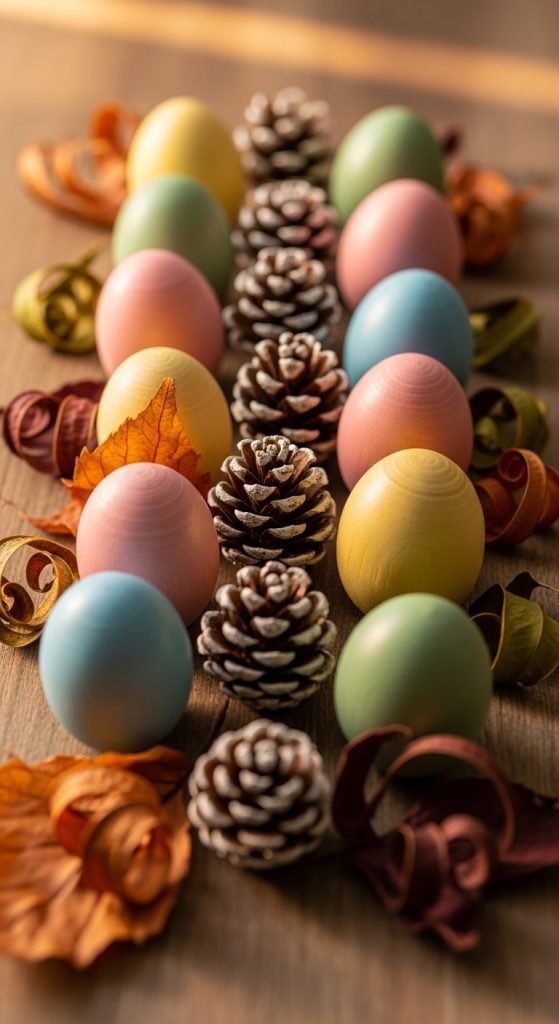
3. Painted Wooden Egg Garland with Natural Accents
Wooden eggs can be painted in soft, pastel tones to mimic the colors of spring. To keep the look natural, add accents like tiny pinecones, dried leaves, or sprigs of herbs between the eggs along the garland. The wooden texture combined with organic elements provides a charming contrast that feels handcrafted and authentic.
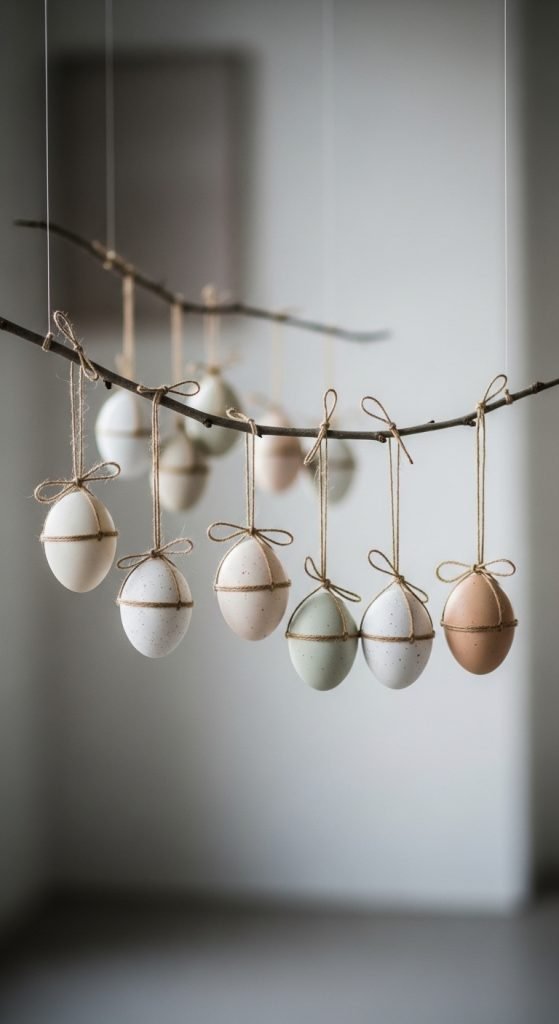
4. Branch and Egg Garland
For a rustic approach, incorporate small, lightweight branches into your garland. Hang the branches horizontally or diagonally, then suspend lightweight eggs from the twigs using natural twine. You can leave the eggs plain, paint them in earthy tones, or lightly stain them to enhance their natural appeal. This garland works well as a table runner, wall décor, or hanging installation.
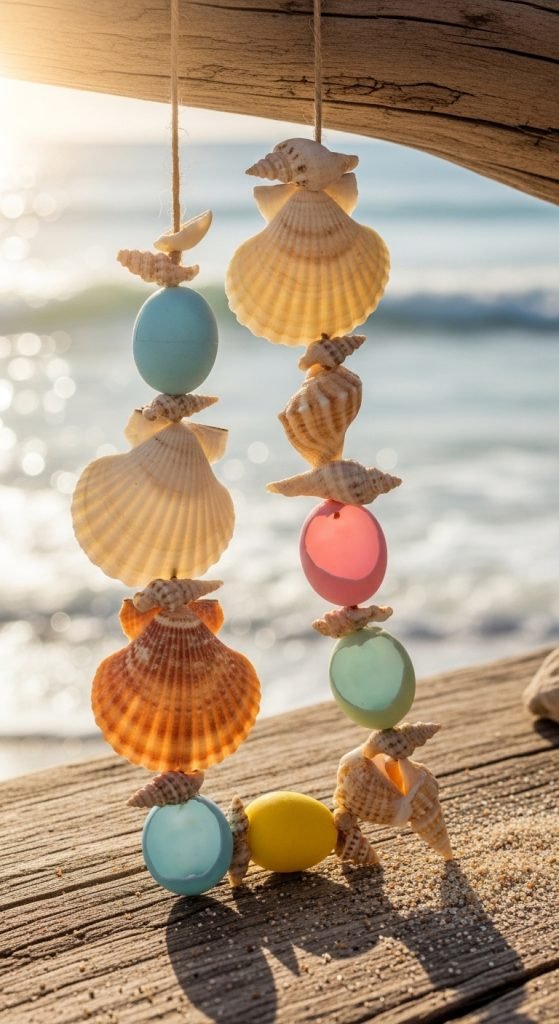
5. Shell and Egg Garland
Using small seashells alongside hollowed eggshells gives a coastal twist to your Easter decoration. Choose pastel-painted eggs and thread them alternately with seashells on a hemp cord or twine. This natural Easter egg garland is perfect for homes near the beach or for anyone who loves a subtle, seaside-inspired holiday aesthetic.
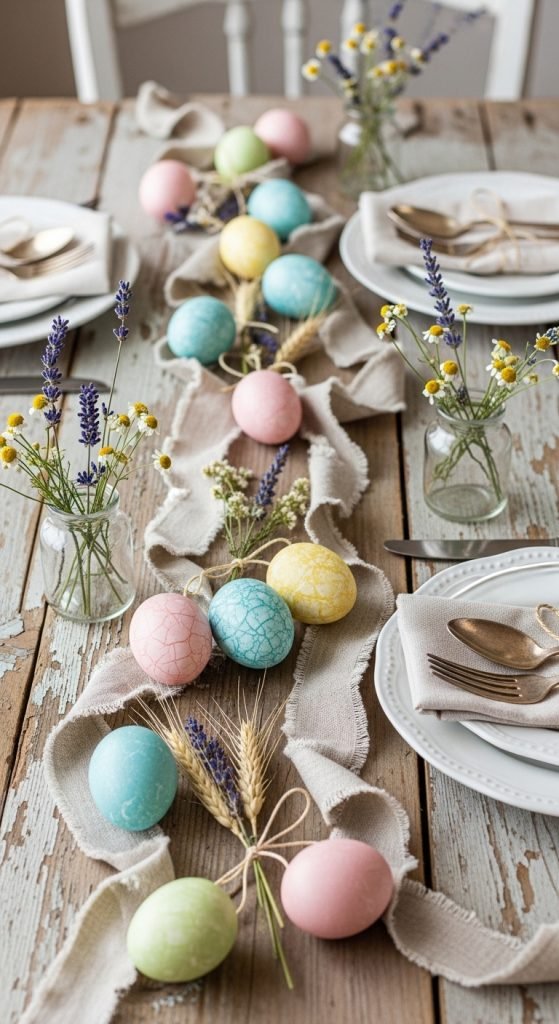
6. Linen Ribbon and Egg Garland
Incorporate fabric for a soft, natural touch by using linen ribbons. Tie small, dyed eggs to the garland using short strips of linen ribbon, leaving some length for a flowing effect. You can also weave dried wildflowers or small sprigs of greenery along the ribbon for an added natural element. This garland has a romantic, shabby-chic style, making it suitable for a dining room or entryway display.
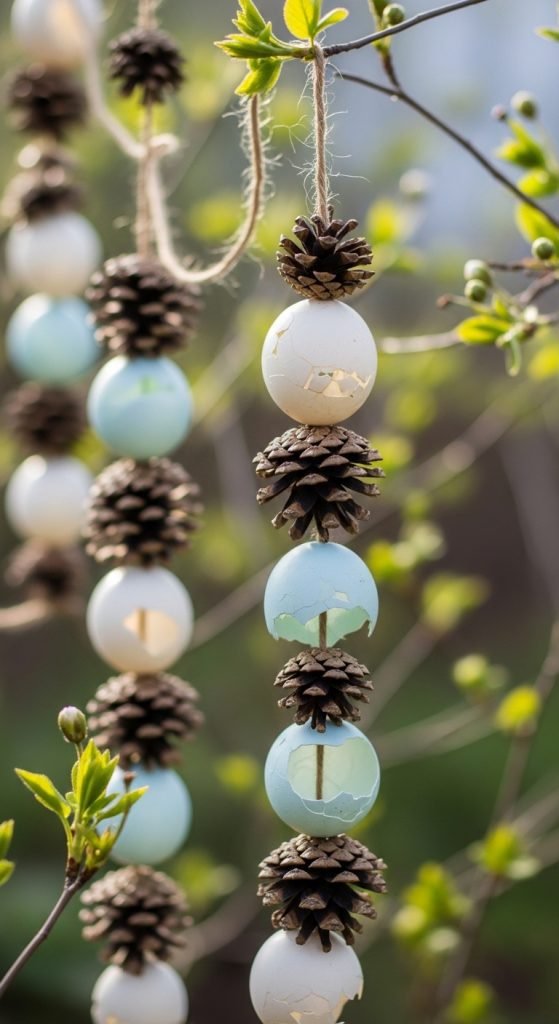
7. Egg and Pinecone Garland
Combine natural elements from the forest for a textural and visually appealing garland. Use small pinecones interspersed with hollowed eggshells, tying each piece with twine. The neutral brown of the pinecones paired with pastel or naturally colored eggs creates a balanced and harmonious aesthetic. Add a few green leaves or twigs for a lively spring touch.
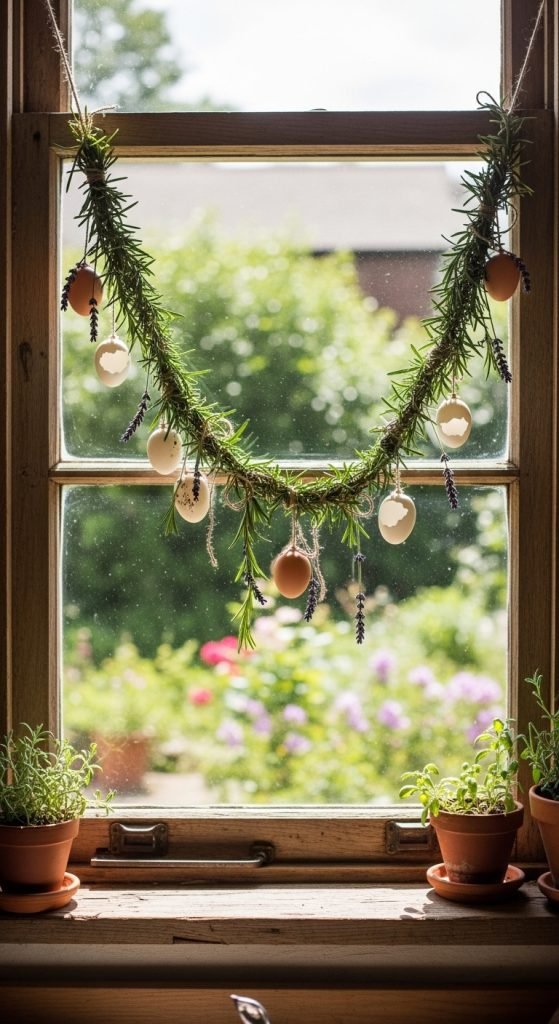
8. Herb and Egg Garland
Bring aroma and greenery into your Easter décor with an herb and egg garland. Use small bundles of rosemary, thyme, or lavender tied between hollowed eggs. You can also hang miniature eggshells from the bundles, creating a sensory experience that’s not only visually pleasing but also fragrant. This garland works beautifully over kitchen windows, dining tables, or garden parties.
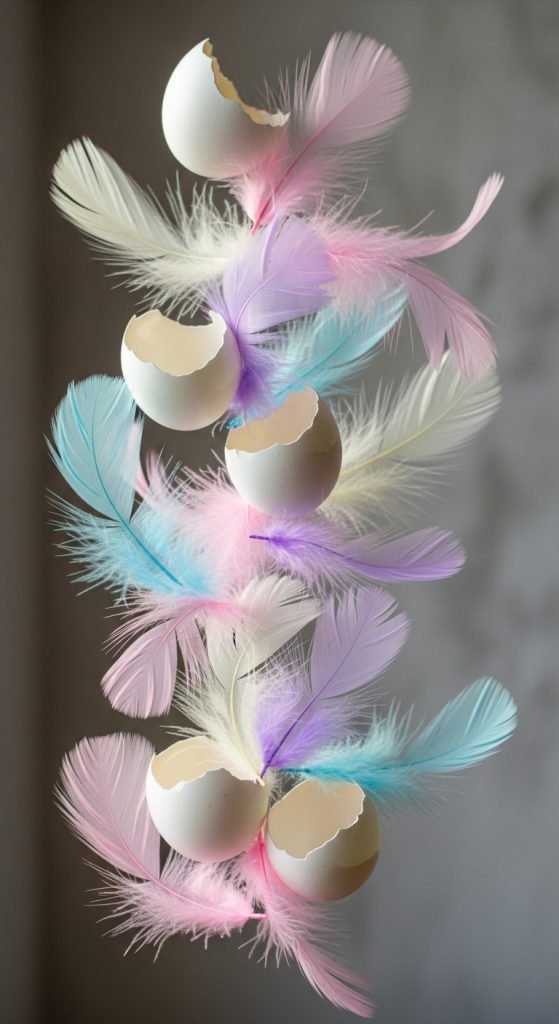
9. Feathers and Egg Garland
Soft feathers paired with natural eggshells create a whimsical, airy garland. Choose feathers in soft pastel shades or neutral tones, and attach them alongside hollowed eggs with natural twine. The movement of the feathers gives the garland a light, springtime energy, making it a standout piece for wall décor, nurseries, or Easter brunch settings.
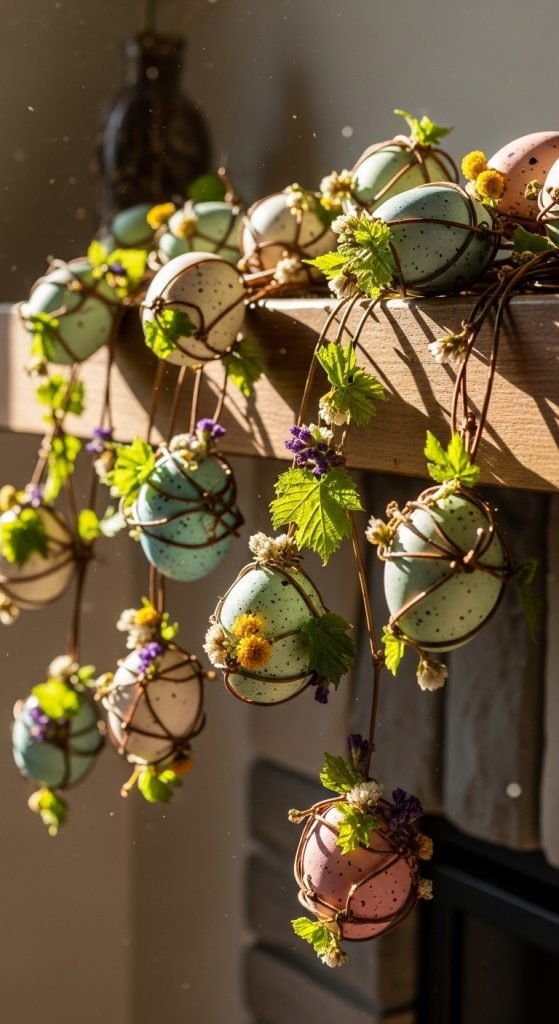
10. Vine-Wrapped Egg Garland
Use natural vine or twine to wrap around hollowed eggs, creating a rustic, intertwined effect. Add small leaves or dried flower buds along the vine, connecting multiple eggs for a long garland. This technique emphasizes the organic feel of your decoration and allows you to customize the length and complexity of the garland. It’s perfect for draping over mantels, staircases, or windows for a natural Easter display.
Tips for Making Natural Easter Egg Garlands
- Choose lightweight eggs: If hanging over long distances, lightweight or hollowed eggs are easier to support.
- Use natural twine: Hemp, jute, or linen cords work best for a rustic look.
- Incorporate fresh elements: Sprigs of fresh herbs or greenery add fragrance and vibrancy.
- Mix textures: Combine eggs with moss, pinecones, feathers, or dried flowers for visual interest.
- Secure properly: Use hot glue, floral wire, or small loops in twine to keep elements securely in place.
Natural Easter egg garlands offer endless possibilities for creativity. They allow you to celebrate the season in a sustainable, stylish, and personal way, while also connecting with the beauty of nature. Whether you prefer a minimalistic, woodland, or rustic aesthetic, these garlands can be adapted to suit your home and personal style, adding a handmade touch to your Easter celebrations.


