Primitive living room décor is all about simplicity, warmth, and a deep connection to the past. Inspired by early American and farmhouse traditions, this style embraces natural materials, muted colors, handcrafted elements, and a cozy, lived-in feel. It’s not polished or trendy—it’s soulful, comforting, and beautifully imperfect. If you love spaces that feel welcoming, nostalgic, and grounded, a primitive living room might be your perfect match.
Below are ten inspiring primitive living room ideas to help you create a space that feels timeless, cozy, and full of character.

1. Embrace Earthy, Muted Color Palettes
Primitive living rooms rely heavily on warm, earthy tones. Think soft browns, aged whites, deep reds, mustard yellows, charcoal grays, and faded blues. These colors were traditionally made from natural dyes, so they appear muted and worn rather than bright or glossy. Using these tones on walls, furniture, and textiles instantly gives your living room a grounded, historical charm that feels calming and authentic.

2. Choose Solid Wood Furniture with Character
Furniture in a primitive living room should look sturdy, simple, and slightly imperfect. Solid wood sofas, benches, coffee tables, and cabinets with visible grain, knots, or distressing are ideal. Avoid sleek finishes—opt for hand-carved details, turned legs, or rough textures that tell a story. The beauty of primitive furniture lies in its age and character, not perfection.
3. Layer Cozy Textiles and Handmade Fabrics
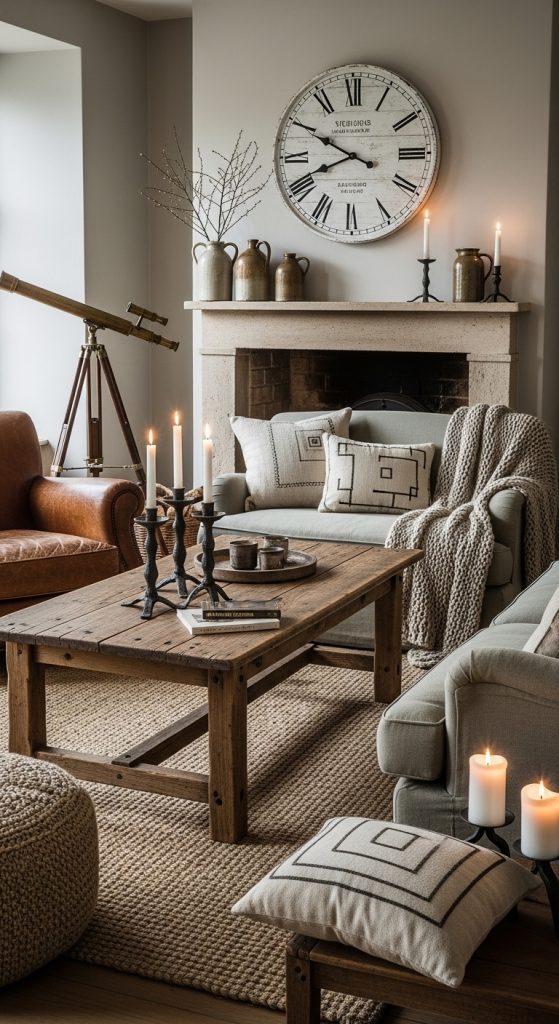
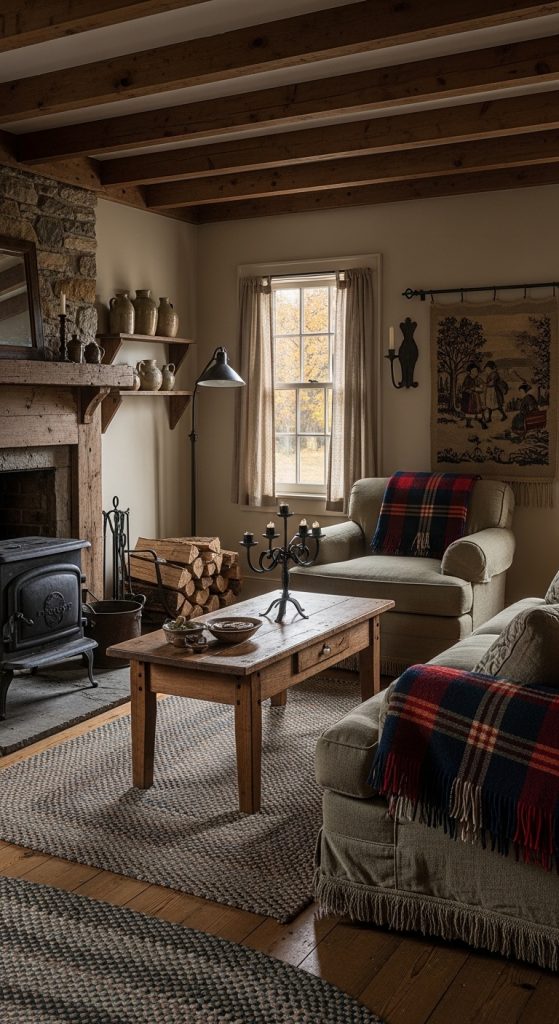
Textiles play a huge role in softening a primitive living room. Add woven throws, patchwork quilts, grain sack pillows, and linen or cotton slipcovers. Patterns like plaids, ticking stripes, and small florals work beautifully. These layers not only add warmth but also give your living room a handcrafted, homey feel that invites you to sit down and relax.

4. Incorporate Antique and Vintage Accents
Nothing brings authenticity to a primitive living room like genuine vintage or antique pieces. Old lanterns, wooden crates, metal buckets, dough bowls, and aged picture frames add history and charm. These items don’t need to match perfectly—in fact, mixing different eras enhances the collected-over-time look that defines primitive style.

5. Use Natural Materials Everywhere
Primitive décor celebrates nature in its rawest form. Incorporate materials like wood, iron, stone, leather, wool, and clay. A stone fireplace, iron candle holders, or a wooden beam ceiling instantly grounds the space. These elements create texture and depth while reinforcing the rustic, old-world feel that primitive interiors are known for.

6. Add Warm, Low Lighting
Lighting in a primitive living room should feel soft and inviting. Skip harsh overhead lights and focus on table lamps, wall sconces, lanterns, and candles. Lamps with fabric shades, oil-lamp styles, or distressed bases work perfectly. Warm lighting enhances the cozy atmosphere and highlights the textures and details in your décor.

7. Decorate with Simple Wall Art and Signs
Wall décor in primitive living rooms is understated but meaningful. Think framed sampler art, vintage botanical prints, simple landscapes, or hand-painted wooden signs with old-fashioned sayings. Weathered frames and muted artwork help maintain the calm, rustic aesthetic without overwhelming the space.

8. Bring in Rustic Storage Solutions
Functional storage can also be decorative in a primitive living room. Use wooden cupboards, open shelving, trunks, and baskets to store blankets, books, or seasonal décor. Woven baskets and old chests add texture while keeping the room organized. These pieces reinforce the practical roots of primitive design.

9. Highlight a Fireplace or Hearth
A fireplace is often the heart of a primitive living room. Whether it’s a stone hearth, brick surround, or wood-burning stove, this feature anchors the space. Decorate the mantel with simple greenery, candlesticks, or antique finds. Even faux fireplaces can recreate the warmth and charm that primitive interiors are known for.

10. Keep the Space Simple and Uncluttered
Primitive living room style thrives on simplicity. Rather than filling every corner with décor, choose fewer, more meaningful pieces. Let textures, materials, and craftsmanship shine. An uncluttered layout makes the room feel peaceful, intentional, and timeless—exactly what primitive design is meant to achieve.
Primitive living rooms are not about trends; they are about comfort, tradition, and a connection to the past. By using natural materials, warm colors, vintage accents, and simple craftsmanship, you can create a living room that feels cozy, authentic, and welcoming for years to come.